An old-fashioned hourglass is a beautiful visual representation of time passing. Grains of sand fall from a miniature heaven into an empty enclosed space. The level rises until the mini heaven has given all that it has to give. In the fullness of time, all is still.
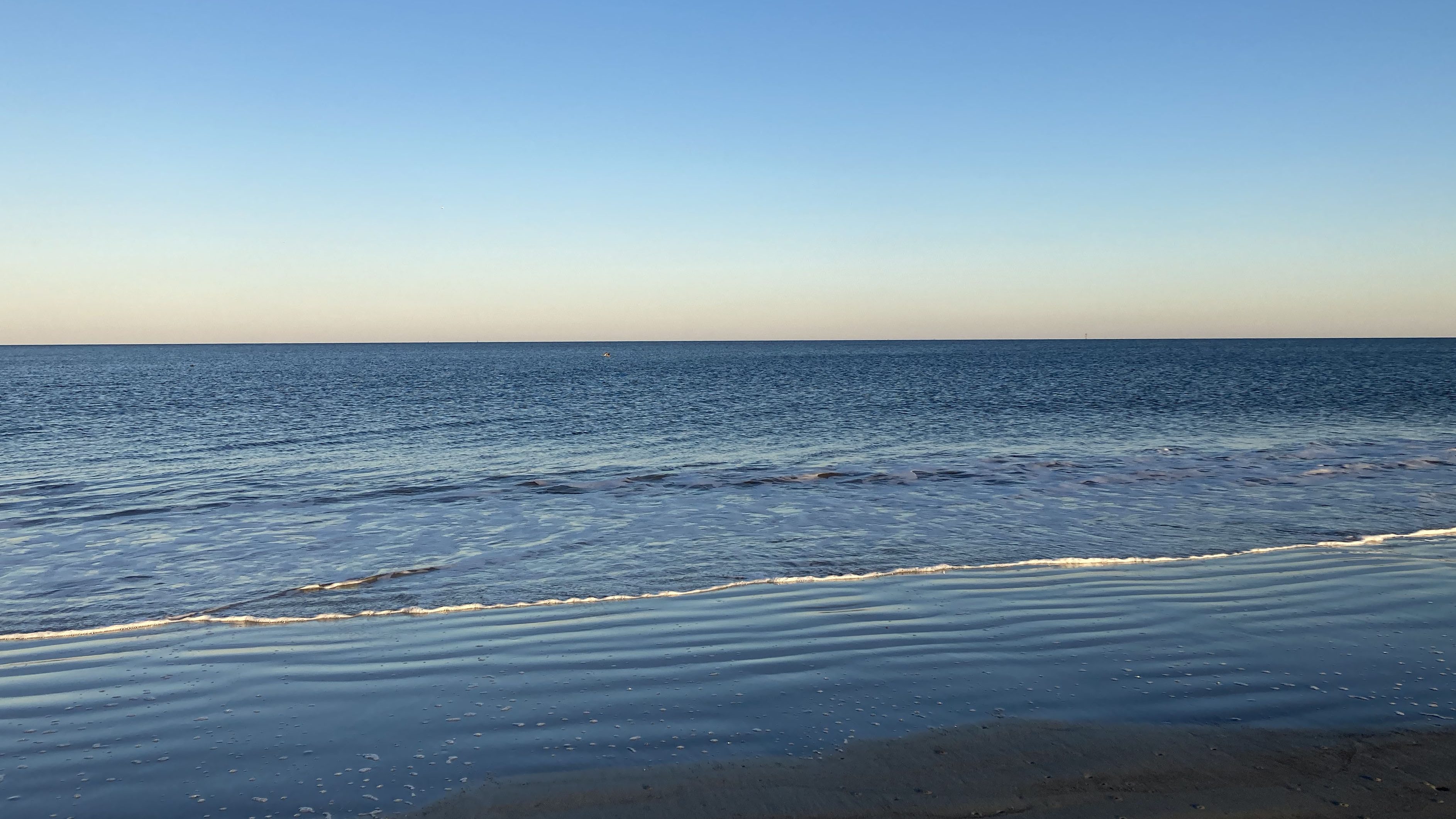
I like to think of real Time as an upside-down version of that image. Instead of sand, I picture water flowing in. Not raining down, but welling up from below. I picture myself in this great glass globe standing at the water’s edge. Time laps at my heels. To live is to walk steadily away from that rising tide. As I walk, every action leaves either an imprint on the land or a visible structure of some kind — evidence of my living and working, responding and doing. The water of Time inches upwards. Most of my doings are covered quickly and disappear. Others take longer to cover. Perhaps I keep adding to the work so that the evidence of it stays above the water line. Or perhaps it is not attached to the land and it floats near me for a while before sinking and disappearing.
When I look around this amazing world, it seems to me that we are each born at the edge of an ocean of time and the water has already risen so high. Most of what others have done is already covered over, but what I still see is as portent as iceberg tips. Everything is evidence of a world below and before. Everything I do will shape the world that others see, but they will never see everything. Someday, when I no longer have the strength to walk, Time will cover me too. And in a day beyond that — in the fullness of time — all will be still. All will be clear.
In the meantime, I walk.
Or float, as the case may be.
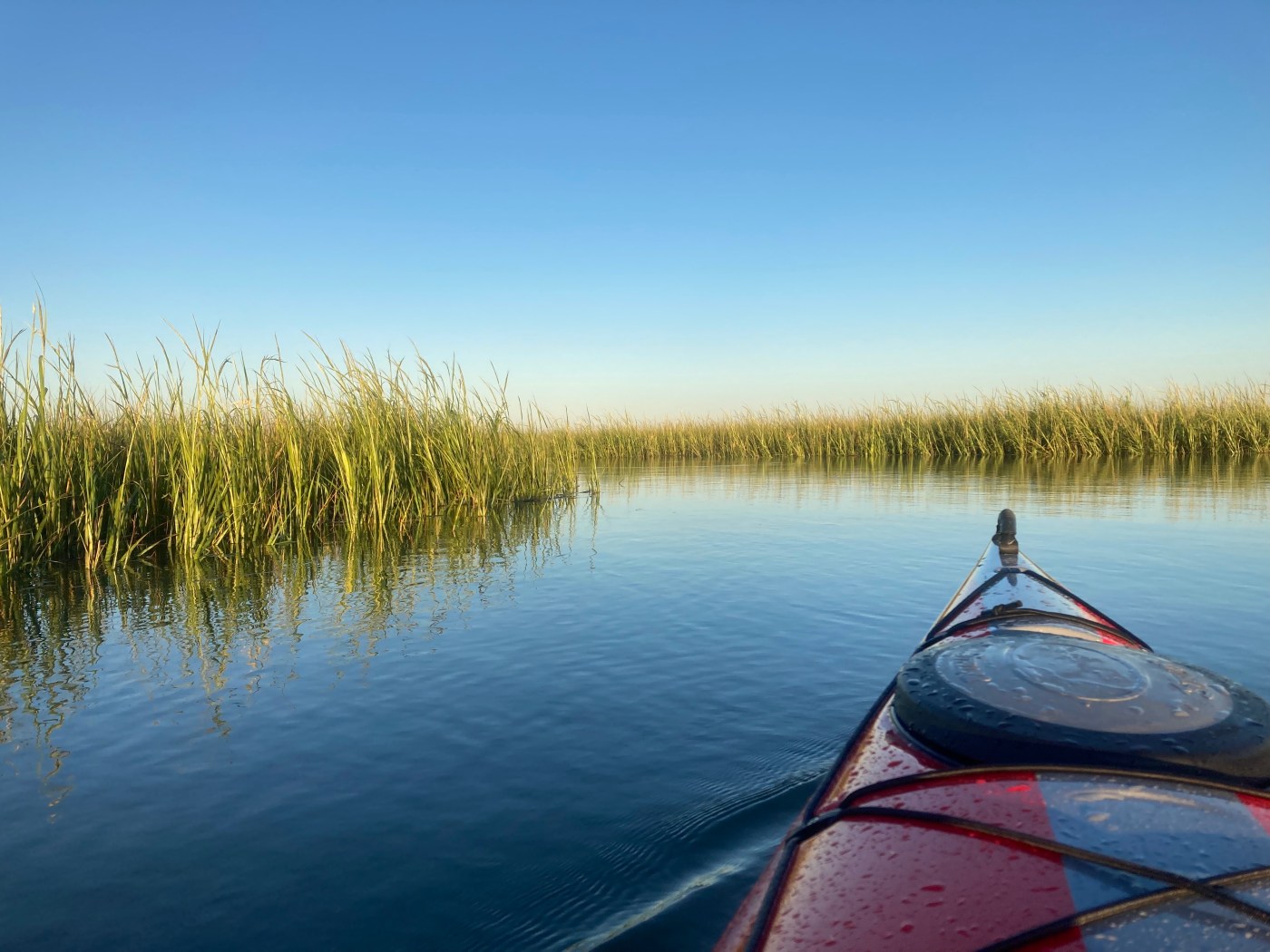
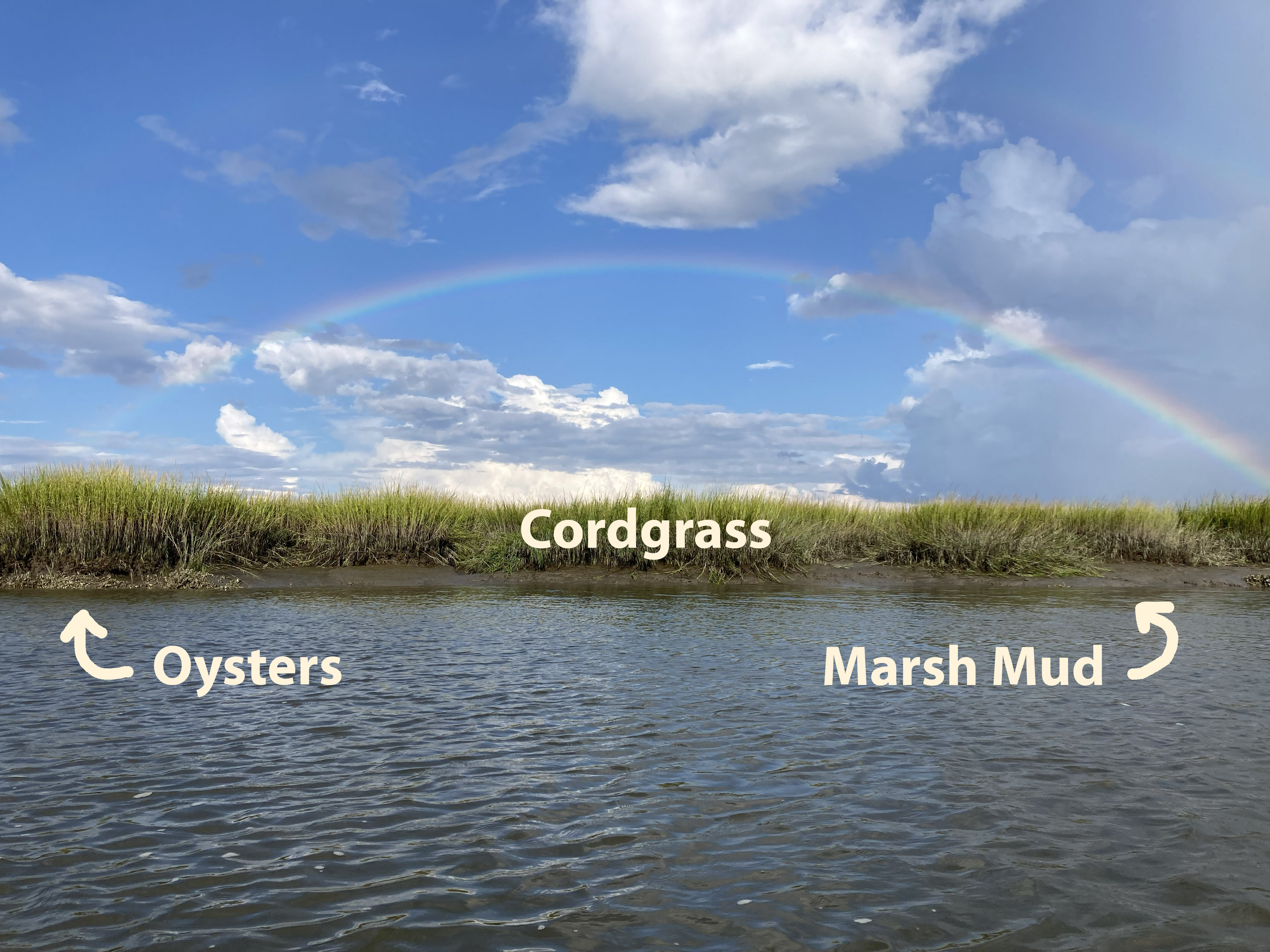
The salt marshes are the feature of Savannah that I love most. I’ve done a lot of kayaking through the marshes in the three years that I’ve lived here. I love the dramatic differences between high and low tide in these grassy tidal creeks. When the moon is full and tide is high, only the very top few inches of cordgrass are visible. You can glide through that grass and it’s like floating on a whispering meadow. Six hours later, those same grass tips may be a full eight feet away (the height of a standard ceiling) and you can’t get anywhere near them because the marsh mud is about to catch you and hold you tight until the tide turns. You hurry to deeper water as the salty, sulphuric smell of sun-baked marsh mud fills your lungs. Somehow that’s okay. Its life and health is pungent.
Oysters are a regular hazard when exploring the salt marshes. Most people who think of oysters usually picture them on a plate in a fancy restaurant. Here they grow wild in massive beds, nestled halfway between high and low tide. They are a vital species in the ecosystem, but they are a serious hazard. The edges of the shells are razor sharp. Since baby oysters make a home by gluing themselves to the sides and tops of other larger oysters, those sharp ridges stick out in all directions. One of the first lessons of boating or swimming around here: stay away from oysters! If you try to stand up on an oyster bed, you may not walk for weeks thanks to a hundred stitches. Take your boat too close to an oyster bed and they might gouge the hull or break a propellor. It’s fine when the tide is low and they are exposed for all the world to see and steer clear. Watch out though if the tide is somewhere mid-cycle — those sharp edges may only be inches below the surface, invisible until too late.
And so it is in life. To mingle metaphors for a moment: the sins and griefs of living often grow like oyster beds in a marsh, sticking one to the next while the tide rises around them. When we see them around us and others, it’s evident which way to steer or what to carefully dig up and clear. If we don’t do either, however, Time will cover them just enough to be dangerous — the water appears safe but they are there just below the surface, ready to wound when we swim or step too close.
All that to say: Time is a tide, and watch out for oysters.


 Of Wonders & Wanders
Good to know, about the oysters. I’ll keep it in mind next time I’m playing in the marshes. Also I like your observation on marsh mud – many life-giving and healthy things are pungent, I suppose.
Imma have to give your thoughts on time and tide a second read for comprehension purposes. But I do like this idea of what we are building with our lives is there and making an impact, even though it may not necessarily be seen.
Encouraging and beautiful writing.
LikeLike